Monday, July 7, 2008

Trouble with Toothpaste…

It has long been a common saying that you “cannot put toothpaste back into the tube” and that is exactly the situation would-be detractors of preterism find themselves in today. This is especially the case as it pertains to those “former” preterists who wish they could simply forget what they know deep within the innermost parts of their being to be true–that Jesus came again, just He promised in those events connected with the destruction of Jerusalem in A.D. 70.

A logics professor once gave his students a simply puzzle to ponder: If a dog has four legs and a tail and you call the tail a leg, how many legs does the dog have? The answer is: four. Just because you call a tail a leg does not make it so. Likewise, with preterism. Just because a person wishes that the teachings were not true does not make it so. To date nobody in the “former” preterist (anti-preterist) camp has presented logical argumentation that refutes the very basis upon which preterism stands.

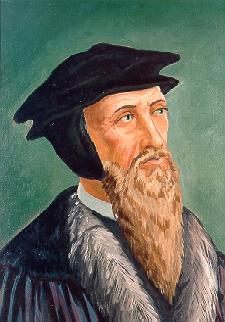
In defending the premillennial position John Walvoord observed that it is not simply an argument over the interpretation of one chapter in the book of Revelation, but that the teaching is found from Genesis to Revelation. His concept was that premillennialism itself affected every aspect of one’s theology from beginning to end. This is also the case with preterism. It is not just an argument about the so-called “time statements” of Scripture, but rather it is about the totality of the eternal purpose of God from beginning to end. For one to simply “walk away” from the teaching implies the necessity of going back to the theological “drawing board” and starting over again. While some within the Reformed community would deny that preterist teaching has any affect on the other great doctrines related to total depravity, unconditional election, limited atonement, irrestible grace, or perseverence of the saints (T.U.L.I.P.) those who are honest with themselves and with the Scriptures understand otherwise. I realize this statement runs counter with the thinking of many Reformed people, and it is certainly not my intention to be offensive to any of them, it is, nevertheless, true. The fact remains that John Calvin did not see the “big picture” as it pertained to salvation-history and the consummation of the ages in A.D. 70. This is not to imply that John Calvin was wrong in his systematic theology, only that parts of the puzzle were not evident to him at the time.

Preterists must be careful at this particular stage of development to steer clear of drawing conclusions based upon other theological preconceptions–right or wrong. Long before the time of Augustine, Calvin, Luther, Wesley and a host of others, believers were “just Christians”–nothing more, nothing less, nothing else. The Bible was, and is, the standard from which “all truth” arises and no systematic theology is 100% correct. The writings of the “Church Fathers” ought to be examined and respected for the contribution each made in the quest to honor and preserve the truth. However, none were inspired then, nor are the “internet theologians” of today inspired. If we had accepted ONLY the writings of the “Church Fathers” and the “Reformers” then no place for preterism could be found. Why? Because the study of eschatology was not their central focus. The church was battling other issues such as “works based” salvation, the exaltation of the virgin Mary, denial of the doctrine of the Trinity etc. The study of Bible prophecy would have to wait until much later for the truth to be discovered and the message proclaimed.

The “former” preterists are getting a collective “pat on the back” from futurists who welcome them back into the fold with open arms. This, however, does not imply that these “born again” futurists have discovered anything of substance that refutes their former position. Every book written to refute preterism is full of logical contradictions and misapplications of Scripture. Many futurist scholars would like people to just ignore what the Scriptures teach on the basis on their reputation alone. “Preterism is wrong BECAUSE WE SAID SO” is not a valid argument and people such as Tim LaHaye are biting off far more than they can chew when encountering a preterist who knows the Scriptures.

Believers should allow sound hermeneutics to determine their systematic theology and not the doctrines and traditions of men. A verse can never MEAN what the verse never MEANT is a good starting point in the quest for truth. I am not saying that people should throw away the contributions of great Reformers such as Calvin and others, only that we do not allow our theology to be shaped by the opinions and writings of others who may or may not be right. We honor the greatness of those who have gone before us and at the time same we press forward in our hunger and thirst for righteousness. The slogan “Always Reforming” must mean something. If the great Reformers were standing alongside us here today, what would be their position? Would they have hearts open to the truth? Would they sacrifice everything to spread the message far and wide? I think so.

Preterism is divided on many fronts–some of which is determined by our past endearment with certain forms of systematic theology. Each of us needs to be willing to study the word of God separate and apart from our “favorite” theologians in order to see the bigger picture. There is a current spirit of critical and judgmental thinking of those who take issue with either Calvinisits or Arminians and speak negatively of each. Truth is too important for us to look down our theological noses at others with whom we disagree. The questions transcend Calvin and others. God is no more a Calvinist than He is a SF 49er fan. This reminds me of the Republicans and the Democrats who insist on dragging God into the political areana and asking Him to choose sides. God is a political “independent” who transcends our silly elections and cheerleading efforts for the candidates.

The preterist toothpaste is out of the tube and those who helped to squeeze it out cannot now turn around and try to put it back into the tube. Too late.

[The statements made above about Calvinism and other doctrines were not mean as an attack against those who subscribe to every aspect of his theology. John Calvin was a good man with a humble heart and a willingness to take stand on his convictions. I apologize in advance for those who may be offended by the observations--they are mine alone. I believe in the Sovereign grace of God, election, predestination, etc as is taught in the Scriptures and not because these doctrines fall into any particular category.--Larry Siegle]

Monday, February 25, 2008

Is the Apostles' Creed as good as Scripture? I Think Not!

We cannot find even one full preterist anywhere in history until the 19th century. If the historic Church is "the Pillar and Foundation of the Truth," how could the Church have totally missed the greatest events in all redemptive history: The Second Coming and the Resurrection of the Dead? If the Church was so radically blind and deaf and steeped in error that it could not see and teach the fulfillment of those cardinal doctrines for about 1,800 years, then the historic Church was the Pillar and Foundation of a LIE. Therefore, as orthodox Christians, we must conclude that preterism, and not the historic Church, is the damnable Lie. If you preterists claim to be Christians, how do you get around this devastating logic?


ANSWER: I agree that it is impossible that the historic Church has been preaching a damnable Lie. However, as every believer agrees, it is possible for the Church to be caught in an eschatological error and to remain at the same time “the Pillar and Foundation of the Truth.” It is therefore not impossible that the historic Church was caught in an eschatological error for 1,800 years and at the same time remained “the Pillar and Foundation of the Truth.”

Eschatological error does not necessarily imply radical, Gospel-overthrowing blindness, deafness and heresy. Even a major eschatological error is not necessarily a Gospel-nullifying Lie. For instance, premillennialism contradicts the orthodox eschatology of the Apostles’ Creed itself. The Creed states that when Christ comes back, He will “judge the quick and the dead.” Yet premillennialists maintain that when Christ comes back He will not judge the quick and the dead, but will instead set up his earthly kingdom for a thousand years. Premillennialists are thus diametrically opposed to a cardinal element of traditional, creedal, eschatological orthodoxy.

But who among those who believe the eschatology of the Apostles' Creed would say that all premillennialists must be excommunicated from the universal Church? Or who among premillennial believers would say that all who believe the eschatology of the Apostles' Creed must be excommunicated from the universal Church?

If we agree then that a significant or major eschatological error is not necessarily a damnable error and that believers can be steeped in eschatological error and still be saved, we must also agree that the traditional, creedal, historic Church could have been caught in a major eschatological error (futurism) and at the same time remained “the Pillar and Foundation of the Truth.”

Usually the ecclesiastical implication of preterism –that the historic Church missed the fact that all things have been fully fulfilled– seems outlandish because many people unwittingly approach preterism using futurist categories. It would indeed be unbelievable that the Church missed a literal “thousand years,” and a literal return of Jesus-in-the-flesh, and a literal “rapture,” and a literal “resurrection of the dead,” and a literal destruction of the universe, and a literal “new heavens and new earth.” Thinking in those futurist terms, the suggestion that all the Scriptures that predicted those events were fulfilled without the Church knowing that those Scriptures were fulfilled is preposterous.

This is why we must think in terms of the preterist paradigm if we are to judge preterism righteously. From the preterist perspective it is not unbelievable that the historic Church had an exegetical misunderstanding about the fulfillment of all things written if the events were fulfilled spiritually according to the preterist interpretation. And from the preterist perspective, the Church’s failure to recognize that many prophetic passages are fulfilled does not imply that the Church “missed” the fulfillment of those passages. It only implies that the Church failed to connect all the right Bible verses to the Christological fulfillment that the Church truly and knowingly sees and embraces.

Despite futurist errors regarding various prophecy-texts, the Church has actually been teaching (full) preterism for nearly two thousand years now. For instance, according to preterism the Parousia was the Coming of Christ Himself to destroy the enemies in His sinful (old-covenant) Kingdom and to indwell His saints. Many or most of the Church Fathers believed that the indwelling of Christ Himself in His Church (in consummation of the work of the Holy Spirit) was already fully fulfilled in history. For example, Mathete’s Epistle to Diognetus, chapter 7 (written about sixty years after the fall of Jerusalem):

...Truly God Himself, Who is almighty, the Creator of all things, and invisible, has sent from Heaven, and placed among men, Him who is the Truth, the holy and incomprehensible Word, and has firmly established Him in their hearts.

The early Church, from the preterist perspective, did not “totally miss” the Parousia. The Church consciously recognized the coming of Christ Himself to indwell His people, and that indwelling, in the preterist framework, is itself the full fulfillment of "the Hope of Israel."

In Ignatius’ Epistle to the Ephesians (written about fifty years after the fall of Jerusalem), in chapter 19, he said that the destruction of Death took place from the time of the Incarnation to the destruction of "the old kingdom." Ignatius and other Church Fathers likewise connected the abolition of Judaism with the gathering of the elect.

From the preterist point of view, it is not a stretch to say that many or most of the Church Fathers perceived the Parousia-Presence of Christ (“Christ in you”) and perceived the destruction of Death and the establishment of the Kingdom in the destruction of Jerusalem ("the old kingdom"). They understood those preterist realities. They recognized them. They described them. They had a preterist understanding of their timing, nature and benefits. They praised God for them. They in no way failed to see them. Their only error was that they failed to connect what they knew and saw and embraced to all the right Bible texts.

The failure of the Church Fathers to connect all the right Bible verses to what they saw and embraced, is a long, long way from the Church Fathers “totally missing” what they saw and embraced.

In order to “totally miss” the fulfillment of all things written, one would have to deny the abolition of Judaism, and deny the gathering of the universal elect in the Christian age, and deny the establishment and presence of "Christ in you," and deny the establishment and presence of the Kingdom of God, and deny the presence of the Church as the established New-Covenant Temple of God, and deny the presence of all the saints, living and dead, as being one body or “communion” in Christ. Those realities are the sum total of (full) preterism. Therefore, if you believe in all those things (and many futurists do), you are a preterist, even if you are an exegetical futurist.

The Church Fathers did not “totally miss” the fulfillment of all things written. They exegetically mis-categorized it. They merely appended an extra-biblical scheme of future events onto their biblically sound, soteriological (full) preterism. The only thing the post-70 Church “totally missed” was the fact that it did not miss the fulfillment of all things written.

So from the standpoint of the preterist interpretation, the eschatological error of the historic Church was not a radical or fatal error. And since it is historically possible that the Church could have been steeped in a non-fatal eschatological error, the historical possibility remains open that preterism is true and that it represents a God-ordained correction of the historic Church’s understanding of certain eschatological texts.

Article take from
Preterist Cosmos
Q & A 108

Saturday, February 16, 2008

The Law was Not Destroyed but Fulfilled in Christ

What is meant by free from the law? Romans 8:2.

In Christ every believer is totally free from the law. "We are not under the law, but under grace" (Rom. 6:15). We are not justified (Rom. 3:19-24), sanctified (Gal. 3:1-3), motivated (II Cor. 5:14), ruled (Tit. 2:11- 12), or glorified (Jude 24-25) by the law, but by grace.

"Christ is the end of the law for righteousness to everyone that believeth" (Rom. 10:4). Do you ask what that means? It means that Christ is the fulfillment of the law, the satisfaction of the law, and the termination of the law to all who believe on him unto life everlasting. It means that there is no righteousness to be had, of any kind, to any degree, by our own works of obedience to the law. The only way anyone can have righteousness before God is by faith in Christ. He is " The Lord Our Righteousness " (Jer. 23:6) and we are the righteousness of God in him (Jer. 33:16; II Cor. 5:21).

"Ye are become dead to the law by the body of Christ" (Rom. 7:4). Do you ask what that means? It means that if you are a believer, if Christ died for you, insofar as the law of God is concerned you are dead. It can make no demands upon you. It can require nothing from you. It can do nothing to you. If you and I are in Christ by faith, we have no covenant with the law, no curse from the law, and no commitment to the law.

This does not mean that we are against the law. God forbid! We are not antinomians. We delight in the law of God (Rom. 7:22). The real antinomian is the legalist who pretends to keep the law. He lowers the standard of the law to the measure of his own obedience. Otherwise he could find no comfort in his obedience. So the legalist turns the law of God into lasciviousness. That is a complimentary word for his pretended obedience to the law!

Why are we so dogmatic in declaring the believer’s freedom from the law, as it is set forth in the scriptures? Let me give you three reasons for our dogmatism: First, the legalist would rob Christ of the glory of his grace, making some part of salvation dependent upon the works of the law. Second, the legalist would rob the believer of the joy of faith, the joy of assurance, and the joy of service to Christ, making assurance to be based upon obedience and service to Christ mercenary acts. Third, the legalist would rob the world of the hope of salvation, for if salvation requires any good work from sinners then there is no hope.


Sunday, January 20, 2008

Roderick Edwards- "Nobody Leaves the Family"

"Another aspect that has been revealing itself more & more, especially as I try to disengage from FP, is that it is a "club" which no one is supposed to ever leave...like the mafia catch-phrase that "no one ever leaves the family", it would seem FP is not something you are allowed to leave. But worse than that is that there are people who are part of the "club" who are not allowed to define it. This becomes evident in that when some FP challenge some of the more popular tenets of FP (such as "covenant creationism", "no more law", "no more need to be 'born-again'") these challengers are quickly reprimanded & the challenger is told that they aren't really FP unless they embrace these views. I imagine what it may have been like for an early Mormon or Jehovah's Witness who may have questioned some of those tenets. I am sure they were quickly told to get with the program or they are out of the club. The same happens within the club or cult of FP. Watch for it to happen as FP morphs more & more into a speculative chaos of humanistic, syncretistic, socialism by the guidance of the unofficial "leader" of FP."


As for Rod's comment towards the issues that upsets him around those who hold to a Preteristic position, when it comes to eschatology, such as:

  • it is a "club" which no one is supposed to ever leave

  • some people of the club are not allowed to define it

  • covenant creationism

  • no more law

  • no need to be born again

these are issues, or similar issues, in which you might find in other circles as well.

If you would go on Rod's Blog site and read the conversation between Kurt & Josh Brisby, you will be surprised how a simply matter over a theological issues causes the two to divide...examine what both sides share.

To answer the comment of it being a club thing, no, holding to the preteristic position is not like being a member of a club; although when you do find others of like faith, which you can do in all views, it does bring a since of peace to share with one another. Not only can we find friends who holds to similar issues but we also can find enemies as well. But when it comes to the saying that you can never leave, like Mormons, JWs, Iglesia ni Cristo and so forth, i would have to disagree with that comment. As you can see through observing Todd Dennis' site he has made it certain to list some from the past who has left and moved on to other views.

What most Sovereign grace Preterist are meaning to say, when it comes to never leaving, is that when you let the Scripture speaks for itself then why would we ever want to turn back to the old ways we once held onto.

Observe the two comments written below:

As we read the Bible, we must keep in mind the hermeneuticial principle of audience relevance, which seeks to discover what the original audience understood a passage to mean. The Bible is written "for" us, but it is not written "to" us. We must seek to understand what Scripture meant to its original audience, then we can apply it to ourselves. As you read the following scriptures, ask yourself these questions: Who is this written to? When was it written? When did they expect Christ to return?

Charles V said to Luther, "One friar who goes counter to all Christianity for 1,000 years must be wrong." Luther replied, "My conscience is captive to the Word of God . . . Here I stand, I can do no other." Luther went against the corrupt Christianity of the day, but he stuck to the Scripture. Sola Fide, and Sola Scriptura, were the cry of the Reformation.

I end this with and old comment from John Calvin

“Reformed and always reforming according to the word of God” is the full phrase that is often used to describe what it means to be a Presbyterian. We change. Our views change, our polity changes, and our theology changes over time. “According to the word of God” is a check on change. We don’t just change for the sake of change but we change in light of the presence of ongoing divine revelation. That is my phrase. Calvin would say that we must be reformed by scripture.

PS

For those of you who are diligently studying the Word of God, please let the Bible be your final authority and do not let these bashing differences from others determine what you will believe other then let the Word of God have the first and final say in all things.

Thursday, February 7, 2008

Love or Doctrine? by Doug Reed

A story is told of a conflict between two great leaders of the reformation—Martin Luther and a fellow named Ulrich Zwingli. The two had doctrinal differences which made unity among Protestants impossible. In an effort to make peace, a man named Philip of Hesse brought the two together in a conference hoping they could hammer out their differences. Luther and Zwingli were able to agree on every single point of doctrine except one. They had differing views on communion. Because of this one difference they refused to shake hands with one another after the conference was over, and all hope for a unified reformation was lost.

In our day disunity because of doctrinal differences continues. Anyone who has frequented internet forums knows how doctrine can cause hatred and downright disgraceful behavior between brothers. Something is terribly wrong when we despise others because we believe they do not know as much about God as we do. Rather than showing how much we know God, such behavior proves that we do not know God, for he who does not love does not know God. (I John 4:7-12).

The question is—can we seek purity of doctrine and still love our brother? That is, can doctrine and love coexist? Some would say no. In fact, many are saying that we are in the midst of a great paradigm change from the modern mindset to the postmodern paradigm. The modern paradigm was based upon great faith in the power of reason and humanity’s ability to find absolute truth. Postmodernism is in some respects a reaction to the failures of the modern paradigm. The postmodernist points to where belief in absolute truth has led us. And where is that? Twenty thousand denominations, that’s where.

The postmodern solution to this problem is to throw out absolutes altogether. The thought is that if we get rid of the idea that there is absolute truth, there can be peace between brothers. This way of thinking might bring a greater peace, but at what price? If we start down the path of relativism, we eventually must lose the absolutes of the Lordship of Christ and redemption itself. We cannot draw lines, because there are no lines in this paradigm. Any and all beliefs must become acceptable—even those that deny Christ. Therefore, the cost of eliminating the idea of absolute truth is not a solution to the divisions among God’s people. The cost is just too high.

On the other hand, there are those who believe unity can come through doctrine. I have heard some say that Preterism will become a unifying force for the whole church. We just need to get everyone to agree, and then we will be one. Through reason and sound arguments we will be able to get everyone to see it our way. Such thoughts might stir the soul, but history proves them unfounded. In fact, when we make doctrinal agreement the basis of our fellowship, the result is not unity but division. We have five hundred years of church history and thousands of denominations to prove this.

I agree with those who say that Christ Himself must be the source of our unity. However, many of these then try to make what they think about Christ the basis of unity, and the cycle continues. They cite belief in certain creeds or traditions to determine what is acceptable, and therefore, who is suitable for their circle of unity. Yet, as we all know, an increasing number of believers are questioning some of the creeds. What about those believers—are they no longer Christian?

If Christ Himself is our only answer to the divisions among us, we must let Him—who He is and what He has done—truly be the basis of our unity. To help us understand how this is possible, let us take a brief look at first century Palestine .

In Jesus’ day there were distinct ideas among many of the Jews about who was close to God and who was far away. One place those distinctions were clearly seen was in Herod’s temple. We have some pretty big church buildings in our day, yet none of them would have compared to Herod’s temple. Herod’s temple was so big that it took up 20% of Jerusalem . The floors were marble, the walls were beautiful white limestone, and many of its interior walls were paved in solid gold. In some of our large churches today we might have fifty or more ministers serving the people. Yet as many as 17,000 priests served at the temple in Jerusalem .

In all of its beauty, Herod’s temple revealed something about the people’s relationship with God. Moreover, it said something about the people’s relationship with each other. If I would pick one word to describe that statement, it would be “separation.” There was separation between God and man, man and man, and even woman and man.

The temple was divided into three courts. The outer court was called the court of the Gentiles. In some respects this first court was for the tourists. People would come from all over the world to see Herod’s glorious temple. In fact, it was said in that day that if you had not seen Herod’s temple, you had not yet seen a beautiful building.

A sign at the entrance to the second court of the temple warned foreigners not to enter, under the penalty of death. A person was refused access to the second court based on who they were, and what they did. Those who were not descendents of Abraham, the uncircumcised, or those who did not keep the Torah could not enter the second court. If they tried to enter, they would be stoned to death. The Romans did not allow the Jews to carry out capital punishment except for this one offence. If you violated this realm, you would be put to death by man. This second, or center, court was divided into three sub-courts. First, there was the court of women. Like the name implies, Jewish women could go here as well as men and children. Then there was the court of Israel, and only Jewish men could go in here. Finally, there was the court of the priests. You had to be a priest to enter here.

Beyond the second court was the Holiest of Holies. The Gentiles had their court. The Jews had their court. The Holiest of Holies was God’s court. Only He could dwell here. It was surrounded by a veil so thick that a team of oxen could not tear it apart. No one except the high priest could enter the Holiest of Holies, and he only once a year at the Feast of Atonement. If a Gentile went into the court of the Jews, man would kill him. If a person went into the Holiest of Holies unlawfully, God would slay him.

The temple was a picture of the relationship between God and man and also between man and man before Christ came. There was separation in every place. There was separation between God and man, Jew and Gentile, and even man and woman. Yet, Jesus, by dying and rising from the grave, tore down all of these walls of separation.

Therefore remember that you, once Gentiles in the flesh—who are called Uncircumcision by what is called the Circumcision made in the flesh by hands—that at that time you were without Christ, being aliens from the commonwealth of Israel and strangers from the covenants of promise, having no hope and without God in the world. But now in Christ Jesus you who once were far off have been brought near by the blood of Christ.

For He Himself is our peace, who has made both one, and has broken down the middle wall of separation . . . . Now, therefore, you are no longer strangers and foreigners, but fellow citizens with the saints and members of the household of God . . . . (Eph 2:11-14, 19 NKJV)

What middle wall do you think Paul is talking about here? He was talking about the wall between the court of the Gentiles and the court of the Jews. When the New Covenant came, there was no longer any distinction between Jew and Gentile. God had made them into one new people. You may have noticed in verse 19 Paul told the Gentiles that they were no longer foreigners. Paul’s wording here is not by accident. As you recall there was a great sign at the entrance to the court of the Jews that said foreigners were not allowed. Now there were no longer any foreigners with God. Moreover, it was God’s desire that the Jews no longer count the Gentiles as foreigners or strangers but as equals before the Lord. It was time to take down that sign.

For you are all sons of God through faith in Christ Jesus. For as many of you as were baptized into Christ have put on Christ. There is neither Jew nor Greek, there is neither slave nor free, there is neither male nor female; for you are all one in Christ Jesus. (Galatians 3:26-28 NKJV)

What about the distinctions in the middle court? Paul shows us that the distinctions of this court also had been lost. There is no longer any distinction between male and female. That does not mean there is no more gender. It just means that one gender can no longer consider itself closer to God or more important than the other. In Jesus’ day men were considered more righteous than women simply by virtue of their gender. Jewish men were called the “Sons of Abraham” and Jewish women, the “Daughters of Eve.” Men did not talk to women in public—it was considered beneath them. Furthermore, education in theological matters was for men only and never for women.

In our day we don’t realize how radical Jesus was in these matters. He was the first to call women the “Daughters of Abraham.” He not only talked with women in public, but he allowed them to be His disciples. Jesus truly tore down the wall between the court of women and court of Israel in His ministry, removing this distinction in all finality at the cross.

But you are a chosen generation, a royal priesthood, a holy nation, His own special people, that you may proclaim the praises of Him who called you out of darkness into His marvelous light . . . . (I Peter 2:9 NKJV)

The wall between the court of the priesthood and the other courts is also removed in Christ. Under the Old Covenant only those of the tribe of Levi were to serve as priests. They would go to God on behalf of everyone else. Those not of this lineage could not approach the Lord themselves; they had to go through the temple priesthood. Now, under the New Covenant, we see a holy nation where all are priests unto God. All may approach the throne of grace.

Seeing then that we have a great High Priest who has passed through the heavens, Jesus the Son of God, let us hold fast our confession. For we do not have a High Priest who cannot sympathize with our weaknesses, but was in all points tempted as we are, yet without sin. Let us therefore come boldly to the throne of grace, that we may obtain mercy and find grace to help in time of need. (Hebrews 4:14-16 NKJV)

This passage also contains a little temple talk. The throne of grace was the mercy seat in the Holiest of Holies. Because our High Priest, the Lord Jesus, has come, we can now come into the presence of God without fear. The veil between God and man has been removed. Under the Old Covenant no one came into God’s presence boldly. In fact, you could die if you went into God’s presence in the Holiest of Holies unlawfully. Near to God was a fearful place. Now, under the New Covenant, God’s presence is a place we come boldly. There we will not find judgment but help and mercy in the time of need.

For He made Him who knew no sin to be sin for us, that we might become the righteousness of God in Him. (II Cor 5:21 NKJV)

God removed all the walls. He removed the separation between God and man and also man and man. This verse tells us how.

The various courts and sub-courts of the temple showed levels of righteousness. The righteousness of a Gentile—in other words, not much—was required to enter the first court! The righteousness of a Jew was needed to enter the second court. If you were a descendant of Abraham and you kept the Law, you could go in there. If you had the righteousness of Jewish woman you could enter the court of the women. If you had the righteousness of a Jewish man, you could enter the court of Israel. An even greater righteousness was required to enter the court of the priests. You had to be of an even more exacting lineage, the tribe of Levi, and you had to keep more exacting laws and rituals. Do you know why no one could enter the Holiest of Holies? Because no one had a righteousness as great as God’s. All were stained by sin.

God, in Christ Jesus, removed all the distinctions of the temple by becoming sin for all and giving His own righteousness to all. While on the cross, Jesus became sin. He became everybody’s having “fallen short.” He became the sin of both Jew and Gentile. As He became sin, God rejected His own Son. He put Him outside the house of God. We know this by Jesus’ own words while on the cross: “Father, Father why have you forsaken Me?” His rejection ended our rejection, both Jew and Gentile.

Then God gave us the most glorious gift. He gave us His righteousness. When this great gift was given, the veil between us and God fell. We would no longer be separated from, but could now come boldly into, His presence.

We must realize that when God gave His righteousness to all, the wall between God and man fell. Yet, the walls between man and man fell also. If both Jew and Gentile have the righteousness of God, can there be any distinction between the two? If a man and a woman have the righteousness of Christ, can there be any distinction between the two? If both the priesthood and the laity have the righteousness of Christ, can there be any distinction between the two? No; all those walls had to fall.

The entire world as it was represented in the temple changed when Jesus died and rose from the grave. They could never look at their relationship with God in the same way. They could never look at their relationship with their neighbor in the same way. Reconciliation between God and man had come; reconciliation between man and man had also come.

“What does this have to do with us today?” we might ask. We no longer fight over things like bloodline and gender. We have “advanced” beyond these things. We have created our own levels of righteousness today. We continue to put up walls between who we see as “in” and who we see as “out.” One way we do this is our understanding of the scriptures. Doctrine, in many ways, has become the self-righteousness of our day.

Self-righteousness is when we look at who we are, what we do, or even the doctrine we hold, as the reason we have closeness and favor with God. We might be tempted to think doctrine can never be self-righteousness. However, we only have to remember the story of Martin Luther and Ulrich Zwingli to see that it can. Doctrine kept these men from seeing that they were brothers. It kept them from seeing that what made them acceptable was not that they got it right, but the fact that Jesus got it right through His finished works.

When I see that who Jesus is and what He has done makes me acceptable to God, I must accept my brother even if he disagrees with me. Believe it or not, a futurist and a preterist are close to God because of Christ, not because of eschatological beliefs. The futurist and preterist are brothers because of Jesus, not doctrine. The fact that the veil remains torn gives testimony to the fact that we are one with the Lord and with one another.

Isn’t this how God relates to us all? He regularly meets with Christians of all traditions. He does not seem to care who has the right doctrine about how we dress, the day of the week we meet, or even who has the right eschatology. He does not look to see who has it right; He looks instead at His Son. God has no other measure. This is what matters most to Him. This is what should matter most to us, too.

Should we then cease all debate over theological matters? No! These things are important, so have at it. Debate and reason with your brother all you want. However, realize that your doctrinal superiority does not make you closer to God than your brother. There are no doctrinal courts in God’s house. Because of Christ you can disagree with your brother and still love him as much as the one with whom you agree. Yes, who Jesus is and what He has done is that big. And because He is that big, both doctrine and love can live together.

Wednesday, January 30, 2008

Are The Tme Statements important in the Sriptures?

Prophecy Quiz

Be diligent to come to me quickly . . . . (2 Tim 4:9)


In the above verse Paul:

A. wants Timothy to join him as soon as possible

B. doesn’t care when Timothy comes, he just wants Timothy to travel rapidly once he departs

Without doubt, Paul desired Timothy to join him as soon as possible. In fact, the second option appears laughable and not really an option at all. But is this not exactly how some want us to understand the following?

He who testifies to these things says, “Surely I am coming quickly.” Amen. Even so, come, Lord Jesus!

Both instances of “quickly” in these verses come from the same root in the Greek. Yet, in order to avoid the obvious implication that Jesus claimed He was coming soon, there are those who would have us believe that Jesus was not proclaiming when He was coming, but how—rapidly. His Second Coming might not occur until centuries after He spoke these words, but once it commenced it would not be a drawn-out affair—it would occur rapidly! Would we accept that meaning for quickly in Paul’s request of Timothy? If not, then perhaps we should question that meaning for Jesus’ statement in Revelation.

  • G5030
    ταχέως
    tacheōs
    takh-eh'-oce
    Adverb from G5036; briefly, that is, (in time) speedily, or (in manner) rapidly: - hastily, quickly, shortly, soon, suddenly.

  • G5035
    ταχύ
    tachu
    takh-oo'
    Neuter singular of G5036 (as adverb); shortly, that is, without delay, soon, or (by surprise) suddenly, or (by implication of ease) readily: - lightly, quickly.

  • G5036
    ταχύς
    tachus
    takh-oos'
    Of uncertain affinity; fleet, that is, (figuratively) prompt or ready: - swift.

Thursday, January 24, 2008

There are true heretics in any group

UNIVERSALISM =
Unbiblical Nonsense Is Venturing Economically
Religiously Selfishly And Loosing Increasingly Scriptural Meaning


I cannot say how much i agree with Dan Habermann when at the end of his comment he makes it so plain and so very simple by saying that there can be found "Heretics" in any group.

Dan Habermann said...

Roderick,

I have been studying your "unpreterization" process and have come to some conclusions. The problem with FP in the present church age is that FP and Arminianism do not mix. When mixed it leads straight to Universalism if all aspects of the doctrine are taken to their endpoints. When I was at the 1st Carlsbad conference, Todd Dennis was supposed to speak about the Dead Sea Scrolls. Instead he unveiled the PretIdeal concept. This coincided with John Noe's Christ many comings theory. The moderator Kurt Simmons should have stopped them from speaking about this. No one did. It would be awesome to imagine FP had a non-fractured leadership and a common creed disallowing these non-Christian ideas to propagate. I have also found that most of these people who are attacking FP are doing so from emotional response to their own problems. One example, who I hope you will not associate with, is Scott Thompson's blog site http://preteristheresy.blogspot.com. He is also known as New Creation. He certainly is not a voice for Christianity. If you look at his site you would want to change religions.

Again, like Todd Dennis, he has personal issues that have caused an emotional theology. FP does not say that the law was abolished, it was fulfilled. Do you see the point? If you were an Arminian of better yet a Dispy, you could never understand this.

The problem in America is the loss of reformed theology. Most reformed church members have no understanding of what Luther accomplished besides the abolition of the Pope and Indulgences. This weak theology then renders most reformed church members Universalists. They do not understand Limited Atonement, etc.

To promote FP to anyone
except those who have fully embraced Reformed theology
will lead them to a destructive state.

It is too bad that people like Don Preston will not say that Annihilationism is false. If you are a true Calvinist and abide by the doctrine you are safe from Universalism after becoming a FP. I challenge anyone to show how this could happen and how it could diminish their faith. Scott Thompson repeatedly states that FP are heretics. He is partially right. There are true heretics in any group. Where in your Calvinism have you gone astray to say that FP leads to Universalism?


Dan

Read the comments on Roderick's site under the article "Unpreterizing Yourself: How did you get here?" and see how both Josh and Kurt go at it in refuting one another. Even though i am a Preterist, I do not support the arminian doctrine that Kurt holds to but please see how Kurt and Josh go at it in their comments to one another.

There will always be differances in the church, as well as in the reformed churches at there, but if Josh's comments must be true then why not also damn the dispensationalist, the pre-millennial view and many others instead of just the Preterist alone. I am sure that the more you will come to the conclusion in the pre millennial view you can see that Christ was said to postpone His kingdom when i Mark 1:15 He made it plane and clear that it was at hand.

I strongly think this fight on Preterism needs to end. There will always be those who creep in the back door with false doctrine for as Dan made it so simple to see "there are true heretics within any group."

Here Preterism is shouting out that Christ has kept His word while secretly the dispensationalist are labeling Christ as the biggest failure who had to move from plan A to plan B. And, even worse still, the dispensationalist labels those who do not support Israel as an Anti-semitic but if you look deeper in the the eyes of dispensationalism, the windows of it's soul, you will see that they are committing the act of pre mediated murder of the very Jews they claim to support since in their doctrine two thirds of them must die...it is almost like David who sent Bathsheba's husband to the front lines to die.

2 Sam 11:14 In the morning David wrote a letter to Joab and sent it by the hand of Uriah. 15 In the letter he wrote, “Set Uriah in the forefront of the hardest fighting, and then draw back from him, that he may be struck down, and die.” 16 And as Joab was besieging the city, he assigned Uriah to the place where he knew there were valiant men. 17 And the men of the city came out and fought with Joab, and some of the servants of David among the people fell. Uriah the Hittite also died.


Let always the scripture be our final authority.


“Reformed and always reforming according to the word of God” is the full phrase that is often used to describe what it means to be a Presbyterian. We change. Our views change, our polity changes, and our theology changes over time. “According to the word of God” is a check on change. We don’t just change for the sake of change but we change in light of the presence of ongoing divine revelation. That is my phrase. Calvin would say that we must be reformed by scripture.


Eph 3 :21 Unto him be glory in the Church
by Christ Jesus throughout all ages
World Without End Amen

Sunday, January 13, 2008

ANTI Towards the Anti-Preterist

Proverbs 13:12
Hope deferred makes the heart sick,
but a longing fulfilled is a tree of life.

This site is dedicated to the brothers/sisters who are running scared from the Preterist point of view. Brothers and sisters are running scared because of the trash that has entered into this position, and it is only a position, towards a person's eschatological stance.

Is not it high time that we clean house!


People such as Gene Cook, Gary North, Kenneth L Gentry Jr., R.C. Sproul, Gary DeMar and so forth are great brothers in the Lord, but when it comes to the Preterist point of view, and a Preterist:

"...according to Webster's Unabridged Universal Dictionary, is "a theologian who believes that the prophecies of the Apocalypse have already been fulfilled" (Source: WordNet ® 1.6, ©1997 Princeton University). Yes, a Preterist believes that all Bible prophecy has been fulfilled. Let that sink in for a moment.... For most people, this is a shocking statement. One that causes an immediate reaction, usually negative. That's too bad, because the Scriptures are very clear as to the timing of its prophecies. Shouldn't we expect God's Word to be understandable?"

these brothers of ours are not a preterist but still a futurist which is why they call themselves a "Partial Preterist."

When "Partial Preterist," such as Gene Cook and Kenneth L. Gentry Jr., come to attack those of us who are Preterist they will label us a such like "Full," "Hyper" and even worse still "a heretic."